

India’s automotive ecosystem is often discussed in the language of the future — electrification, alternative fuels, connected mobility, and manufacturing scale. Sales milestones are celebrated. Technology roadmaps are debated. Policy conversations focus on what comes next.
Yet one critical stage of the vehicle lifecycle remains underexamined: what happens when a vehicle should exit the system, but doesn’t?
This is the blind spot of End-of-Life Vehicles (ELVs).
As India’s vehicle population grows, the need for structured pathways to sell scrap car online and access authorised vehicle scrapping facilities is becoming increasingly important for sustainability, compliance, and economic efficiency
India’s Growing Vehicle Market and the ELV Challenge
India has emerged as one of the world’s largest automotive markets, with expansion across personal mobility, commercial transport, and logistics. As vehicle ownership deepens beyond metropolitan regions, the overall vehicle parc continues to age.
Historically, vehicles were expected to phase out organically. In practice, they often remain in use well beyond their optimal operational life, functioning under outdated safety and emission standards.
In mature automotive markets, vehicle retirement is planned and regulated. In India, it has traditionally been informal. However, digital platforms now allow owners to sell scrap car online, creating traceable and compliant exit pathways that align with evolving regulatory norms.
Why End-of-Life Vehicles Matter for Sustainability and Safety
Ignoring ELVs has far-reaching implications:
Environmental Impact
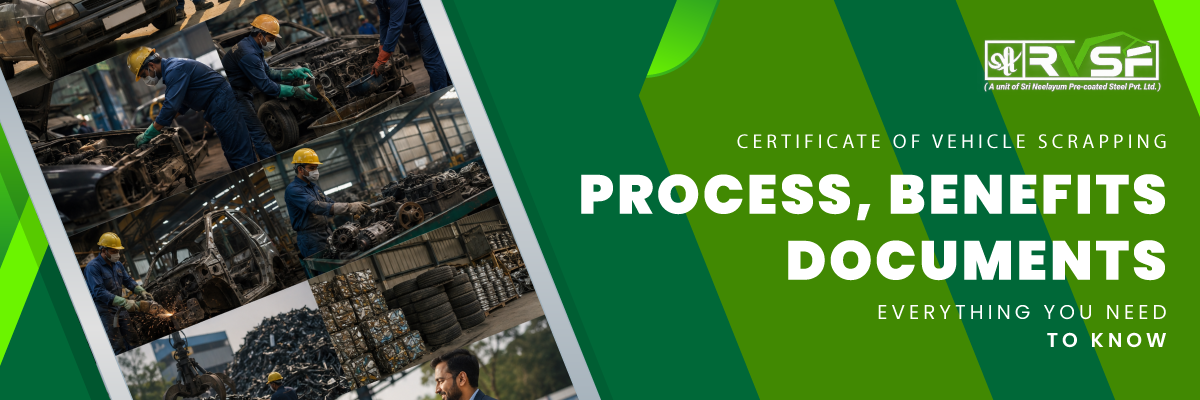
A small proportion of older vehicles contributes disproportionately to urban air pollution due to inefficient engines and degraded emission systems. Transitioning such vehicles to authorised vehicle scrapping facilities ensures environmentally responsible dismantling and material recovery.
Road Safety Risks
Ageing vehicles face structural fatigue, braking inefficiencies, and mechanical breakdowns. Removing unfit vehicles through formal scrappage channels improves overall road safety standards.
Economic Inefficiency
While retaining an older vehicle may appear cost-effective, long-term fuel inefficiency, maintenance expenses, and compliance penalties increase total ownership costs. Structured options to sell scrap car online simplify the transition toward newer, more efficient vehicles.
Informal Dismantling Risks
Unregulated scrapping practices lead to environmental contamination, material loss, and potential misuse of vehicle identities. Formal vehicle scrapping facilities mitigate these risks through compliance, digital documentation, and safe recycling standards.
Policy Reforms Driving Formal Vehicle Scrappage in India
India’s regulatory landscape is shifting toward lifecycle accountability. Recent reforms include:
● Mandatory vehicle fitness testing
● Deregistration norms for ageing vehicles
● Green tax frameworks
● Digitised vehicle databases
These measures reinforce a clear policy direction: vehicles are not meant to remain in circulation indefinitely.
As enforcement strengthens, retaining unfit vehicles becomes increasingly costly. This regulatory push is accelerating demand for authorised vehicle scrapping facilities and digital platforms that allow vehicle owners and fleet operators to sell scrap car online in a compliant manner.
By the latter half of this decade, lifecycle compliance will likely become central to ownership and fleet management strategies.
The Circular Economy Opportunity in Vehicle Scrapping
Beyond compliance, ELVs represent a major opportunity within India’s circular economy transition.
Vehicles contain high-value materials such as:
● Steel
● Aluminium
● Copper
● Plastics
● Glass
When processed through certified vehicle scrapping facilities, these materials re-enter manufacturing supply chains, reducing dependence on primary extraction and imports.
Digitally enabled ecosystems that allow owners to sell scrap car online help formalise the collection process, improving traceability and ensuring that ELVs enter regulated recycling channels.
Globally, automotive recycling is a strategic industry supporting industrial resilience and resource efficiency. India is now positioned to integrate ELV management into its broader sustainability agenda.
Why End-of-Life Vehicle Management Can No Longer Be Ignored
The automotive ecosystem functions as an interconnected network — manufacturers, dealers, insurers, financiers, fleet operators, recyclers, and regulators.
Weak lifecycle governance undermines system-wide efficiency and trust.
As India aligns its mobility sector with global sustainability and safety benchmarks, structured vehicle retirement through authorised vehicle scrapping facilities and transparent systems to sell scrap car online will become foundational pillars of a mature automotive ecosystem.
The future of mobility will not be defined only by how vehicles are built and sold, but by how responsibly they exit the system.
End-of-life vehicles sit at the intersection of environmental responsibility, regulatory compliance, and industrial optimisation.
Addressing them is not merely about removing ageing assets — it is about strengthening the foundations of India’s automotive ecosystem.
As lifecycle thinking becomes central to policy and corporate strategy, formal scrappage infrastructure, compliant vehicle scrapping facilities, and seamless digital channels to sell scrap car online will shape the next phase of India’s mobility evolution.